






Kfc Club
authorized club
best shop
adv ex on 22 February 2024
Savastan0
Blackstash cc shop
Trump cc shop
Wizard's shop 2.0
Luki Crown
BidenCash Shop
Patrick Stash
Money Club cc shop
Rescator cvv and dump shop
banner Expire 1 April  2021
banner expire at 13 August 2024
Yale lodge shop
UniCvv
Carding.pw carding forum

Doofi Stealer 2025

amitmartin

New member


Doofi Stealer 2025


Doofi Stealer 2025

Doofi Stealer 2025: Advanced FUD Python Stealer for Discord Integration and Chrome V20 Compatibility

In the evolving landscape of cybersecurity tools and ethical hacking resources, Doofi Stealer 2025 emerges as a powerful, open-source Python-based stealer designed for compatibility with the latest Chrome V20 updates. Hosted on GitHub under the repository avatar198/Doofi-stealer-discord-FUD, this Fully Undetectable (FUD) stealer offers developers, penetration testers, and security researchers a robust framework for data extraction and remote logging via Discord webhooks. Whether you’re exploring malware analysis, red teaming exercises, or building custom security tools, Doofi Stealer 2025 stands out for its ease of use, modular features, and 2025-ready optimizations.

This SEO-optimized guide dives deep into what makes Doofi Stealer 2025 a go-to solution in 2025, covering its features, setup, usage, and why it’s essential for anyone searching for “FUD stealer Python tools” or “Discord stealer with Chrome V20 support.” Let’s unpack this innovative software step by step.

What is Doofi Stealer 2025?
Doofi Stealer 2025 is a cutting-edge, FUD (Fully Undetectable) stealer script written in Python, specifically engineered to bypass modern antivirus detection while extracting sensitive data from target systems. Version 2.2, the latest release as of October 2025, emphasizes stealth, automation, and integration with Discord for real-time log delivery.

Unlike generic stealers that falter against updated browser protections, Doofi Stealer 2025 excels in decrypting Chrome’s V20 passwords—a critical feature for ethical hacking simulations or forensic analysis. It’s not just a tool; it’s a comprehensive suite for system reconnaissance, making it ideal for cybersecurity professionals testing defenses in controlled environments.

Key highlights:

Open-Source Accessibility: Freely available on GitHub for community contributions.
Python-Powered: Leverages Python 3.10+ for cross-platform compatibility (Windows-focused testing).
FUD Crypter Integration: Ensures payloads evade detection in 2025’s threat landscape.
For those querying “best Python stealer 2025,” Doofi delivers on performance without compromising on simplicity.

Core Features of Doofi Stealer 2025
Doofi Stealer 2025 packs a punch with features tailored for efficiency and stealth. Here’s a breakdown of its standout capabilities:

1. Advanced Data Extraction
Chrome V20 Password Decryption: Seamlessly cracks and exports the latest Chrome browser passwords, autofills, and cookies—vital for simulating phishing or credential theft scenarios.
Autofill and Wallet Stealing: New in V2.2, it harvests browser autofill data and scans for cryptocurrency wallets (e.g., MetaMask, Exodus) and traditional ones like PayPal.
System Intelligence Gathering: Captures computer name (cname), public IP address, and user details for comprehensive profiling.
2. Stealth and Persistence Mechanisms
FUD Crypter: Built-in obfuscation to make compiled executables undetectable by AV tools like Windows Defender or third-party scanners.
Admin Privileges and Startup Execution: Forces elevated runs and auto-starts with Windows for persistent access.
Discord Webhook Logging: Sends all stolen data directly to a configurable Discord channel for instant, encrypted remote monitoring.
3. User-Friendly Builder Interface
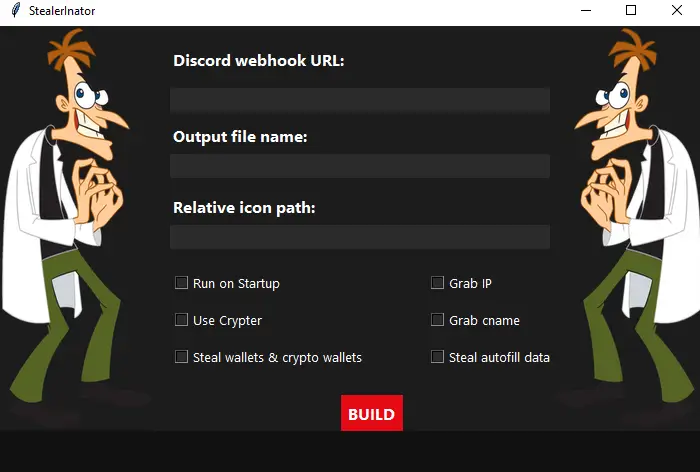
GUI Overhaul (V2.1+): Intuitive graphical interface for selecting modules, inputting webhooks, and customizing output files.
Modular Options: Toggle features like password stealing or wallet extraction to build lightweight, targeted payloads.
One-Click Build: Generates standalone .exe files ready for deployment.
These features position Doofi Stealer 2025 as a top contender in searches for “FUD Discord stealer tools” or “Python malware builder 2025,” offering unmatched flexibility for advanced users.

System Requirements and Setup for Doofi Stealer 2025
Getting started with Doofi Stealer 2025 is straightforward, ensuring minimal barriers for developers and testers. Here’s what you need:

Minimum Requirements
Python Version: 3.10 or higher (tested on 3.10 for optimal performance).
Operating System: Windows 10/11 (primary focus; adaptable for others with tweaks).
Dependencies: Handled via a simple setup script—no manual pip installs required.

Download Link


Download Link


[/CENTER]
 

Shooter

New member


Doofi Stealer 2025


Doofi Stealer 2025

Doofi Stealer 2025: Advanced FUD Python Stealer for Discord Integration and Chrome V20 Compatibility

In the evolving landscape of cybersecurity tools and ethical hacking resources, Doofi Stealer 2025 emerges as a powerful, open-source Python-based stealer designed for compatibility with the latest Chrome V20 updates. Hosted on GitHub under the repository avatar198/Doofi-stealer-discord-FUD, this Fully Undetectable (FUD) stealer offers developers, penetration testers, and security researchers a robust framework for data extraction and remote logging via Discord webhooks. Whether you’re exploring malware analysis, red teaming exercises, or building custom security tools, Doofi Stealer 2025 stands out for its ease of use, modular features, and 2025-ready optimizations.

This SEO-optimized guide dives deep into what makes Doofi Stealer 2025 a go-to solution in 2025, covering its features, setup, usage, and why it’s essential for anyone searching for “FUD stealer Python tools” or “Discord stealer with Chrome V20 support.” Let’s unpack this innovative software step by step.

What is Doofi Stealer 2025?
Doofi Stealer 2025 is a cutting-edge, FUD (Fully Undetectable) stealer script written in Python, specifically engineered to bypass modern antivirus detection while extracting sensitive data from target systems. Version 2.2, the latest release as of October 2025, emphasizes stealth, automation, and integration with Discord for real-time log delivery.

Unlike generic stealers that falter against updated browser protections, Doofi Stealer 2025 excels in decrypting Chrome’s V20 passwords—a critical feature for ethical hacking simulations or forensic analysis. It’s not just a tool; it’s a comprehensive suite for system reconnaissance, making it ideal for cybersecurity professionals testing defenses in controlled environments.

Key highlights:

Open-Source Accessibility: Freely available on GitHub for community contributions.
Python-Powered: Leverages Python 3.10+ for cross-platform compatibility (Windows-focused testing).
FUD Crypter Integration: Ensures payloads evade detection in 2025’s threat landscape.
For those querying “best Python stealer 2025,” Doofi delivers on performance without compromising on simplicity.

Core Features of Doofi Stealer 2025
Doofi Stealer 2025 packs a punch with features tailored for efficiency and stealth. Here’s a breakdown of its standout capabilities:

1. Advanced Data Extraction
Chrome V20 Password Decryption: Seamlessly cracks and exports the latest Chrome browser passwords, autofills, and cookies—vital for simulating phishing or credential theft scenarios.
Autofill and Wallet Stealing: New in V2.2, it harvests browser autofill data and scans for cryptocurrency wallets (e.g., MetaMask, Exodus) and traditional ones like PayPal.
System Intelligence Gathering: Captures computer name (cname), public IP address, and user details for comprehensive profiling.
2. Stealth and Persistence Mechanisms
FUD Crypter: Built-in obfuscation to make compiled executables undetectable by AV tools like Windows Defender or third-party scanners.
Admin Privileges and Startup Execution: Forces elevated runs and auto-starts with Windows for persistent access.
Discord Webhook Logging: Sends all stolen data directly to a configurable Discord channel for instant, encrypted remote monitoring.
3. User-Friendly Builder Interface
GUI Overhaul (V2.1+): Intuitive graphical interface for selecting modules, inputting webhooks, and customizing output files.
Modular Options: Toggle features like password stealing or wallet extraction to build lightweight, targeted payloads.
One-Click Build: Generates standalone .exe files ready for deployment.
These features position Doofi Stealer 2025 as a top contender in searches for “FUD Discord stealer tools” or “Python malware builder 2025,” offering unmatched flexibility for advanced users.

System Requirements and Setup for Doofi Stealer 2025
Getting started with Doofi Stealer 2025 is straightforward, ensuring minimal barriers for developers and testers. Here’s what you need:

Minimum Requirements
Python Version: 3.10 or higher (tested on 3.10 for optimal performance).
Operating System: Windows 10/11 (primary focus; adaptable for others with tweaks).
Dependencies: Handled via a simple setup script—no manual pip installs required.

Download Link


Download Link


[/CENTER]

What defensive techniques should organizations prioritize in 2025 to detect and mitigate Python-based data stealers targeting modern browsers and messaging platforms?


Cloned

New member

What defensive techniques should organizations prioritize in 2025 to detect and mitigate Python-based data stealers targeting modern browsers and messaging platforms?

1️⃣ Shift From Signature Detection to Behavior-Based Detection (Top Priority)​


Why it matters
Python stealers are frequently:


  • Packed with PyInstaller / Nuitka
  • Recompiled daily
  • Delivered via phishing or cracked software

Signature-based AV alone is ineffective.


What to prioritize​


  • EDR/XDR with behavioral analytics
    • Detect:
      • Credential store access (browser SQLite DBs, DPAPI calls)
      • Unusual access to %AppData%, Local State, Login Data
      • Python processes spawning archive tools or network clients
  • MITRE ATT&CK mapping
    • Especially:
      • Credential Access
      • Collection
      • Exfiltration Over C2 Channel

✅ Focus on what the malware does, not what it looks like.


2️⃣ Harden Browser and Messaging Platform Data Stores​


Primary targets in 2025


  • Chromium-based browser profiles
  • Session cookies & tokens
  • Messaging app local caches

Defensive actions​


  • Enforce OS-level credential isolation
    • Windows: Credential Guard, LSA protection
    • macOS: Hardened runtime, TCC restrictions
  • Enable browser enterprise policies
    • Disable password export
    • Restrict local credential storage where possible
  • Prefer password managers with hardware-backed encryption

🛡️ Make stealing data harder even after compromise.


3️⃣ Restrict Python Execution in Endpoints (Very Effective)​


Python is legitimate—but rarely required on most user endpoints.


Controls to implement​


  • Application Control / Allowlisting
    • Block:
      • Unsigned Python interpreters
      • PyInstaller-packed executables from user-writable paths
  • Constrain scripting engines
    • Limit Python to:
      • Approved virtual environments
      • Developer systems only
  • Monitor LOLBins
    • Python abusing:
      • curl, powershell, certutil, tar, zip

🎯 This single step disrupts many Python-based stealers.


4️⃣ Network-Level Exfiltration Detection​


Most Python stealers still need to send data out.


What to monitor​


  • Unusual outbound connections
    • Newly registered domains
    • Low-reputation IPs
  • Encrypted but suspicious traffic
    • Small, frequent HTTPS POSTs
    • Telegram Bot API abuse
    • Discord webhook traffic from endpoints

Tools & techniques​


  • DNS logging + anomaly detection
  • TLS fingerprinting (JA3/JA4)
  • Egress filtering (deny by default where possible)

🌐 Data theft without exfiltration = failed attack.


5️⃣ Email & Initial Access Hardening (Still Critical)​


Most infections still start here.


Defensive priorities​


  • Advanced phishing detection
    • HTML smuggling
    • Password-protected archives
  • Disable macro execution by default
  • Block executable downloads from email
    • Especially .zip, .rar, .iso, .img

📧 Reducing initial access massively lowers risk.


6️⃣ Identity & Session Protection (Modern Focus Area)​


In 2025, attackers often skip passwords entirely.


Must-have protections​


  • Phishing-resistant MFA
    • FIDO2 / passkeys where possible
  • Session anomaly detection
    • Impossible travel
    • Token reuse
  • Short-lived session tokens
    • Especially for admin accounts

🔐 Protect identities, not just devices.


7️⃣ Endpoint Telemetry & Deception Techniques​


Advanced but increasingly valuable.


Effective approaches​


  • Canary browser credentials
    • Fake credentials that alert on use
  • Decoy files
    • Browser DBs monitored for access
  • Memory monitoring
    • Detect credential scraping from running processes

🧠 Early warning before major damage.


8️⃣ Incident Readiness & Rapid Containment​


Detection without response is incomplete.


Prepare for:​


  • Immediate endpoint isolation
  • Forced credential rotation
  • Token invalidation across platforms
  • Browser profile resets

⏱️ Speed matters—stealers operate fast.


9️⃣ User Awareness (But Make It Practical)​


Avoid generic training.


Focus on:


  • “Cracked software = high risk”
  • Fake AI tools, plugins, cheats, trading bots
  • Why password reuse is dangerous

👤 Humans are still part of the attack surface.


🔑 Priority Summary (If You Can Only Do 5 Things)​


  1. Behavior-based EDR/XDR
  2. Restrict Python execution on endpoints
  3. Harden browser & messaging data storage
  4. Monitor outbound traffic & exfiltration
  5. Enforce phishing-resistant MFA
 
Top